Monday, July 9, 2012

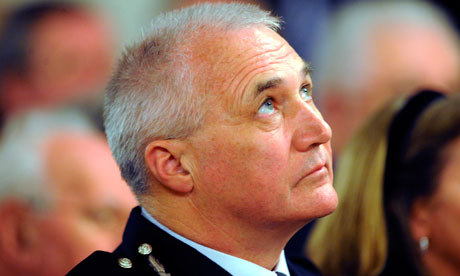
Clacton:PC Ian Dibell from Essex Police shot and killed intervening in dispute whilst off duty.

Peter Reeve 
Peter Reeve is believed to be armed
The hunt for a gunman suspected of killing an off-duty policeman in Essex has continued through the night.
PC Ian Dibell, 41, was shot dead in Clacton-on-Sea on Monday afternoon - his chief constable said he had been a "brave neighbourhood officer".
Essex Police have vowed to "not rest" until the man suspected of the attack, Peter Reeve, 64, has been detained.
PC Dibell is thought to have been killed when he tried to intervene in a dispute. A second man was wounded.
Mr Reeve, who is believed to be armed, has been described as dangerous by police, who said he should not be approached.
He is described as white, about 5ft 10ins tall with short, greyish hair, wearing jeans and possibly glasses. He comes from the Clacton area.
Speaking at a news conference on Monday night, Essex Police Chief Constable Jim Barker-McCardle said PC Dibell was "an experienced and professional neighbourhood police officer" who "deliberately intervened in what he knew was an extremely deadly situation".
'Woman's scream'
The chief constable said: "Policing is a family and we are all hurting.
"This dreadful event reminds us all that policing is a mission that ultimately some die for.
"We will not rest until we have Peter Reeve in custody - the investigation will continue round the clock."
Residents of Redbridge Road in the seaside town described hearing shooting and screaming at about 15:40 BST.


Ian Dibell 
PC Ian Dibell was an "experienced neighbourhood police officer"
A 45-year-old woman, who lives yards from the scene, said she heard "a lot of commotion" and saw a man running up the road.
Hazel Field, 75, who lives in Redbridge Road, said: "I was in the garden at the time and heard a gunshot, followed by a woman's scream.
"Then I heard another gunshot, followed by about five more."
Eric Long, 80, said he saw the gunman from his window: "I saw him standing with some kind of revolver.
"He was chasing somebody, firing as he went."
When police arrived at the scene, they found PC Dibell dead and another man with serious leg injuries lying in the street. He is receiving hospital treatment for gunshot wounds to the leg.
A white tent now stands where the police officer was shot.
Paying tribute to him, Mark Smith, chairman of the Essex Police Federation, said: "Constable Ian Dibell was a dedicated professional officer who, even though off duty, has paid the ultimate sacrifice for his bravery and selfless actions in trying to protect his local community."
Sir Hugh Orde, president of the Association of Chief Police Officers, said: "The death of our colleague in Essex is deeply sad news for the police service.
"PC Ian Dibell died while knowingly walking towards danger, as police officers are called upon to do on behalf of the public they serve.
"The courage he showed in stepping up to do his duty, without thought for his own safety, sums up what it means to be a police officer."

http://www.bbc.co.uk/news/uk-england-essex-18778574

Clacton:Fatal Shooting - Peter REEVE

Essex Police have released a photograph of the man they are searching for in connection with the fatal shooting of a serving police officer in Clacton.


Police are urging members of the public to take great care and not to approach Peter Reeve who is believed to be armed.

Armed officers are searching for the 64-year-old man who is believed to have shot dead the serving police officer and injured another man following a shooting off Redbridge Road.

Police were contacted shortly after 3:30pm on Monday, July 9, 2012 following reports of shotgun fire. They arrived and found one man dead and one man with serious leg injuries lying in the street.

Reeve is described as white, around 5ft 10in tall with short greyish hair. He was wearing jeans and possibly glasses. He comes from the Clacton area and should not be approached.

Residents are being urged to remain indoors while armed officers locate the gunman. Neighbourhood policing officers are maintaining a high-profile and visible presence in the community, supporting victims and witnesses.

Anyone who knows where Reeve is or has information about him or where he might be should contact police on 999.

http://www.essex.police.uk/news_features/homepage_latest_news/reports_of_shooting_in_clacton.aspx#.T_s2mb6cfIo.twitter

Clacton : Officer Shot Dead - Gunman On The Run.

Armed officers are hunting for the lone gunman who killed the officer and shot and injured another man, in Clacton, Essex before escaping.

It emerged tonight that a serving Essex Police officer - understood to be a sergeant based in Colchester - was killed by the gunman.
The officer, in his 40s, lives at the house close to where he was shot and it is not thought he was on duty when the incident took place.
Two police helicopters are hovering overhead and the body remains underneath a red blanket and a white gazebo-style tent has been erected over the body.
Essex Police have not officially confirmed that their officer was killed by the gunman but sources close to the enquiry have confirmed the news....read more

http://www.telegraph.co.uk/news/uknews/crime/9387534/Gunman-on-run-after-policeman-shot-dead-and-woman-injured-in-Essex.html

Monday, July 2, 2012

Establishment Child Abuse Cover-Up: Graham Power: 'I was suspended by the very government whose institutions were being investigated. You cannot get much more conflicted than that."

Graham Power, Jersey
Graham Power: 'I was suspended by the very government whose institutions were being investigated. You cannot get much more conflicted than that." Photograph: Toby Melville/Reuters
 
Before moving to Jersey to take charge of the island's police in 2000, Graham Power had served in the senior ranks of four other forces in a career spanning more than 30 years. A recipient of the Queen's Medal for distinguished service, he had been vetted by UK authorities to "top secret" level and was so well regarded that he had also been appointed an assessor for the body that selects chief officers for UK constabularies.

But after eight successful years on Jersey, Power found himself suddenly suspended in what one local politician supporter believes was a "coup d'etat engineered by a small group of powerful people who denied him natural justice".

The initial suspension, which related to Power's management and supervision of a child abuse inquiry centred around Haut de la Garenne, a children's home on the island, continues to be a hugely controversial topic in Jersey. It's an episode which Jersey's critics see as a prime example of the way the island's elite treats those who dare to challenge their authority.
Nine months before Power's suspension on 12 November 2008, the historic child abuse investigation made headlines around the globe after Power's deputy, Lenny Harper, told the world's media he thought his team had found human remains buried under Haut de la Garenne. He told hordes of journalists that suspicious forensic material discovered during excavation tallied with accounts given by various abuse victims of hearing children dragged from their beds at night who were then never seen again. .

By the time Power was suspended, Harper had retired. The very day Power was suspended, the new officer in charge of the inquiry, Detective Superintendent Mick Gradwell, said at his first press conference that there had never been compelling evidence to justify the excavation, and much of what was found there did not suggest murder, contrary to initial police reports.
"There are no credible allegations of murder, there are no suspects for murder and no specific time period for murder," said Gradwell. To this day, Harper vigorously defends the way he carried out the investigation.

Forensic experts still disagree over whether suspicious material found during the excavation of the home was 20th century human bone or a piece of coconut shell, and no one has ever been able to explain the discovery of 65 milk teeth found in the building's cellar. But Jersey's authorities eventually accepted they had failed some children in their care "in a serious way", and earlier this year opened a compensation scheme promising to pay victims up to £60,000 each for their distress.

The States of Jersey have also agreed to hold an independent "committee of inquiry" into child abuse within the island's care system.

By the time the historic abuse investigation was closed in December 2010, eight people had been prosecuted as a result of the Power inquiry – a far lower number than initially expected. Just four related to Haut de la Garenne, with one abuser receiving a light sentence having himself been abused at the home.

Power, as well as child abuse survivors the Guardian has spoken to on the island, claim that after his suspension, some victims lost faith in the investigation. He said: "After my suspension a police officer working in the incident room approached me in the street and told me that incident room staff were busy dealing with calls from victims who were distressed after hearing that I had been suspended and were saying that 'it would all be covered up again'. I have had similar messages from people close to victims and from individual victims who do not wish to be named."

David Warcup, Power's replacement, insisted at the end of the investigation that there was "no evidence from which it would be possible to mount any further prosecutions."

As Power sees it, his suspension was a punishment for daring to challenge Jersey's "secrecy culture" by investigating serious allegations made against some of the island's power players. Worse, by allowing Harper to talk freely to the media during the investigation, both men were damaging Jersey's reputation abroad – a nightmare for a small place with an economy so dependent on foreign finance that it as Power claims, had a "heightened sensitivity to reputational damage". Or as the Liberal MP John Hemming puts it: "I think he was suspended because he was too ethical. That is very worrying."

On Tuesday this week, politicians in the States of Jersey, the island's parliament, debated behind closed doors whether Andrew Lewis, the minister responsible for Power's suspension, had misled States members as to the reasons why he removed Power from office.

The deputy who demanded the debate, Mike Higgins, said disclosure was needed to "right a wrong". He wanted the parliament to agree to release a transcript of a States session held "in camera" shortly after Power's suspension, in which Lewis gave what Higgins believes is a misleading statement relating to Power's suspension.

But at the closed session on Tuesday, States members voted to keep the transcript secret.
Power was never found guilty of any charges of misconduct, and remained on full pay throughout his two-year suspension, which lasted until his retirement in July 2010. Contacted by the Guardian this week, Lewis insisted the reasons for suspending Power were "compelling". He said: "The act of suspension was fully in line with the disciplinary code and was a neutral act in order to give the chief officer sufficient time to defend his position uncompromised by the constraints of office." He could not go into more detail about the evidence which led him to suspend Power, he said, because he was "bound by the confidentiality requirements in the chief police officer's discipline code." He strongly rejected any allegations of a conspiracy.

Power is not the only one who feels cast out after asking difficult questions. In 2012, an American author and journalist, Leah McGrath Goodman, found herself banned from the UK and Channel Islands, which she says followed the Jersey establishment discovering she was writing a book about the historic child abuse inquiry focussed on Haut de la Garenne. Both the UK Border Agency (UKBA) and Jersey's customs and immigrations service insist her ban was unrelated to her journalistic investigations. But Goodman believes differently, having been flagged by Jersey customs officials as a potential criminal as soon as they found out what she was doing on the island – information she says she offered voluntarily after requesting a meeting to check that a flat and office she had leased in St Helier conformed to Jersey's strict rules on accommodation for so-called "non-qualified" residents.

A spokeswoman for the UK Border Force told the Guardian: "Ms Goodman was refused entry to the UK because we were not satisfied she was genuinely seeking entry as a visitor for the limited period she claimed. Further enquires showed that she attempted to mislead the Border Force officer about her travel plans and the reason she required entry to the UK."

Goodman disputes this. She said: "To date, the UK Border Force can do little more than accuse me of intending to possibly commit a future transgression, as it has been forced to admit there has been none. This has been a bit like the film Minority Report, in that I am being pursued for something that hasn't actually taken place. As a former Tier-1 visa holder with a spotless record, I was surprised to be locked up, denied legal representation and banned from a country for which I've always held the highest respect. I have never misled the UK Border Force, nor have I ever intended to. I do realise it is a delicate situation, but I hope I might finish my work."

Charities have also encountered problems after questioning Jersey's modus operandi. In May, ActionAid and Christian Aid, both of which have been critical of the island for providing shelter to tax avoiders, were two of 20 charities that lost support for their general overseas aid projects from Jersey's Overseas Aid Commission.

Funding was pulled following a threat floated last year by the commission's executive officer, Kathryn Filipponi, who warned Jersey may "reconsider" donating hundreds of thousands of pounds of public money to UK charities which repeatedly attacked the island for being a tax haven.
Announcing the decision last month, the commission chairman, Paul Routier, insisted the move was not motivated by political or religious factors, and said the two charities had still received approval to collect funding to provide disaster and emergency relief.

As Hemming sees it, Jersey's current system is compromised by nepotism and conflicts of interest which result in the most powerful protecting each other. "For the checks and balances to work, people cannot be related or close friends," said Hemming. "The problem in Jersey is that things are covered up rather than dealt with. That arises with any small group of people where conflicts of interest are built into the system."

Arriving on Jersey at the start of the new millennium after a successful spell as deputy to HM Chief Inspector of Constabulary for Scotland, Power soon realised there were special challenges policing a small island where everybody knew each other. "In Jersey there are often school and family connections between police officers, lawyers, politicians and criminals," he told the Guardian.

"This can of course happen in any small community. In the UK, forces deal with this by ensuring that police officers are rarely asked to police the community they were brought up in. In Jersey that is not possible. The island is nine miles by five and there is only one police station. We were constantly having to deal with issues where somebody involved in a case appeared to have a conflict of interest, or worse than that, where there appeared to be a leak of intelligence from inside the force which benefitted criminals who might have had some connection within the organisation."

In a signed affidavit he submitted when applying for judicial review to his suspension in 2009, he claimed that one of the officials on the island who played a "significant role" in his suspension publicly defended a suspect in the historic abuse investigation. "If anyone wants to get ____[the suspect], they will have to get me first," said Bill Ogley, chief executive of Jersey's civil service, according to Power. This show of support was applauded by a number of civil servants present, he added. Ogley denies having made these comments.

Power believes his suspension sets a disturbing precedent which needs to be challenged. Otherwise, he said in his affidavit: "There are potentially serious consequences for the independence and integrity of law enforcement in the island and an additional risk that future police actions will be subject to inappropriate political pressure and intimidation."

Power firmly believes his suspension was orchestrated by Frank Walker, then occupying the top political job on the island as chief minister.

In his signed affidavit, Power says he attended a meeting just before Lewis took over where Walker unleashed a "verbal attack on the historic abuse inquiry claiming that it was causing damaging publicly for the island."

When contacted by the Guardian last week, Walker declined to comment on this or any of 14 other claims put to him, saying: "I am surprised that you are seeking to raise questions which have been asked and answered many times in the years since Mr Power's suspension. I'm afraid I am not prepared to yet again go over such old ground. I will merely say that I was then, and remain today, absolutely confident that Mr Power's suspension was necessary and appropriate. His conspiracy theories are entirely baseless."

He refused to explain why he believed Power's suspension was justified, nor to comment on a claim made by a deputy in the Jersey's parliament, Paul le Claire, who in the debating chamber alleged that he took part in a conversation between Walker and Lewis in which they discussed "getting rid" of Harper. Le Claire only went public on this two years after the fact, explaining in an interview with the Jersey blog Voice For Children

that he had been too scared to talk out. He claimed there was on the island a culture of fear which deterred ordinary people from speaking out.

Higgins, the Jersey politician who tried to "right the wrong" of Power's suspension in Tuesday's parliamentary sitting, told the Guardian: "Jersey, like other small island states, has a small powerful elite which pervades all sections of public and private life and which uses its positions and influence to its advantage. In my opinion, the investigation and handling of the police investigation into Haut de la Garenne was not only acutely embarrassing to them but it also opened up a can of worms that they did not want exposed.

"In my opinion, Mr Power's original suspension resembled a coup d'etat engineered by a small group of powerful people who denied him natural justice and have attempted since then to thwart enquiries, investigations and scrutiny into this affair and the original child abuse investigations. They have been aided and abetted by a politicised civil service, compliant media and other well meaning but naive politicians".

It is a common complaint on Jersey that the island's media, particularly the only newspaper, the Jersey Evening Post (JEP), were more concerned with protecting the island's reputation than the victims of child abuse. In January, the Jersey Care Leavers' Association complained to the island's Health and Social Services department, after a JEP article seemed to disparage the compensation scheme soon to be announced for the victims. In a column, a JEP journalist had written: "By the way, you're about to pay out millions upon millions to abuse victims in civil compensation claims. That'll do wonders for the island's image, right?"

It is largely due to two tenacious bloggers, Rico Sorda (ricosorda.blogspot.com) and Neil McMurray (Voiceforchildren.blogspot.com) that Power's suspension has remained so high on the political agenda. Both complain that the JEP has failed to investigate what they see as the injustice of Power's treatment.

Senior politicians were also accused of putting Jersey's interests ahead of the vulnerable and abused. In a notorious 2008 speech to mark the island's liberation from the Nazis, Sir Philip Bailhache, then the island's bailiff, came under fire after he said : "All child abuse, wherever it happens, is scandalous, but it is the unjustified and remorseless denigration of Jersey and her people that is the real scandal."

Bailache, now an elected politician in the States of Jersey, was one of 19 MPs who on Tuesday voted against holding the "in camera" debate on whether Lewis as home affairs minister misled the States over Power's suspension. He is also known to have opposed the committee of inquiry soon to be set up to investigate how so many children being looked after by the Jersey authorities were abused.

Two years ago, a QC from the mainland, Brian Napier, was commissioned to produce an independent report into Power's ousting. He found no evidence of any conspiracy, but ruled that the suspension could not be justified by hard evidence.

In his report, Napier wrote: "Whatever view may now be taken of the substantive criticisms that have been made of Mr Power's conduct of the historic abuse inquiry, there was at the time a lack of hard evidence against him showing lack of competence in relation to the running of the historic abuse inquiry, the basis on which he was suspended on 12 November 2008 was in my view inadequate."

He added: "There were indications that Mr Power had not done his job well. But that is as far as it goes."

Napier found that at the time of the suspension meeting, Lewis had not read a key report later relied on to justify Power's ousting. The report, conducted by the Metropolitan police, was a standard critical appraisal, fairly common between police forces. It was never intended for any disciplinary use. And, as Napier noted, it was labelled "interim", carrying a warning that it was unfinished, that Harper had not yet been interviewed, and that views expressed in it could change when it was completed.

Napier suggested Lewis was wrong to suspend Power "without waiting for the results of a preliminary investigation into the facts in order to allow him to decide whether the matter was of the more serious kind or not."

What's more, Napier found that Lewis and colleagues were "actively preparing for suspension" some time before anyone on Jersey, let alone Lewis, had read the interim report: Warcup, Power's new deputy and anointed successor, only received it on 10 November, two days before Power was suspended.

Napier said: "It would appear that the administration was actively preparing for suspension some time before the interim report was sent to Mr Warcup on 10 November and that those responsible for making preparations for suspension, should the minister so decide, were making significant assumptions about what the Metropolitan police report would contain."
While accepting that mistakes were made in the inquiry, Power insists that had he ever been given a chance to appeal his suspension in a fair and impartial hearing, he would have "torn apart" the case against him. This week, Ian le Marquand, the current home affairs minister, said there was insufficient time to conclude such a complex hearing before Power retired in July 2010. While admitting the original suspension hearings were hasty, and that Power should have been given a proper hearing, Le Marquand maintained that sufficient grounds existed at the time for Power to be suspended. He argued that a report commissioned a long time after Power's original suspension –

written by the chief constable of the Wiltshire force – confirmed there were grounds for doubting Power's management.

Power is adamant he was targeted by an establishment riddled with conflicts of interest. "At the core of it all is the fact that as chief of police I was overseeing an investigation into serious child abuse in institutions run by the Jersey government which were themselves overseen by people who were still in positions of power within that government. In the midst of this I was suspended by the very government whose institutions were being investigated. You cannot get much more conflicted than that. It is not often that an organisation subject of a major criminal inquiry is able to suspend the police chief responsible for that enquiry. But in Jersey that happened."

It's an allegation Ian le Marquand rejects. "This simply does not stand up to any serious examination. The nature of the disciplinary complaints against Mr Power in relation to Haut de la Garenne is that he failed to exercise proper oversight over the deputy chief officer of police [Harper] who was acting as the senior investigating officer... By the time Mr Power was suspended he had had no role in relation to the investigation for some months. To therefore suggest that his original suspension had anything to do with his conduct of the investigation is simply untrue. In any eventuality there never was any evidence of criminal misconduct on the part of politicians or the government of Jersey in general."

• This article was amended on 29 June 2012. The original referred to charities that have been critical of the island for preventing, rather than providing, shelter to tax avoiders, and to allegations being refuted rather than rejected. This has been corrected.

Friday, June 29, 2012

#G4S : #UK Police Outsource To The World's Biggest Security Firm.

G4S is in line to win more British police work this year after an alliance between Hertfordshire, Bedfordshire and Cambridgeshire forces commissioned a report into which services they could outsource to the world's biggest security firm.

All three police authorities this week backed a move to join an outsourcing framework agreement established by G4S and Lincolnshire police authority last year as they look to tackle government budget cuts and find total savings of 73 million pounds ($113 million) by 2015/16....read more


http://uk.reuters.com/article/2012/06/28/uk-g4s-police-idUKBRE85R1DL20120628

#Prison: John Massey Denied A Licence To Say Good-Bye.

Prisoner John Massey, with parents
 
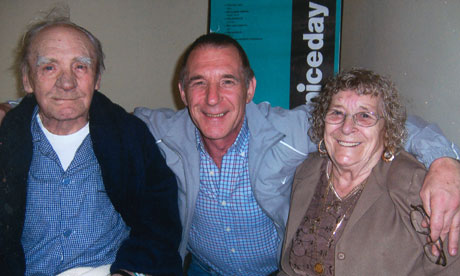
John Massey (centre, with his parents) was refused permission to extend his parole curfew when his father was dying.
 
Imagine yourself in this scenario: you have been released on parole after serving 31 years for murder. You are sent to live in a bail hostel and ordered to comply with a strict 11pm curfew. Though technically free, you are aware that you could be recalled to prison at any moment, for a single minor breach of the terms of your licence.

Each day you travel to a hospital to visit your terminally ill father. One day, a doctor tells you your dad has only a short time to live. You want to remain by his side but your curfew is fast approaching. You call the hostel to plead for an extension but are told categorically this is out of the question.

What would your next move be? For one man this awful dilemma became a reality on 7 November 2007.

In 1976, John Massey, now 63, was sentenced to life for murdering a club bouncer after a drunken row. He was released in June 2007.

Before he was freed, Massey had been preparing for release for 18 months in an open prison in Derbyshire. Granted home leave, he was let out for five days every month to be at home with his family in London and visit his father in hospital. "I got myself a terrific job – shop fitting," he recalls. "For the first time in my life I was fully legal and it felt wonderful. All that changed when I got parole."

His sister had offered a home with her in north London, but the probation service insisted he live in a bail hostel in Streatham, south London, some distance from his family in Camden. He describes the hostel as dirty and with more rules than the open prison he had just left.

Massey complied with all the rules for several months until his father's imminent death forced him to choose between his family and his liberty. Although two doctors were prepared to verify that his father's death was near, his pleas for an extension of his curfew were rejected. He stayed with his dad, Jack, who died four days later. Without waiting for the funeral, Massey turned himself in to the police and was immediately recalled to prison.

Two and a half years after that breach, Massey thought he was on the verge of freedom again. He had been decategorised and sent to another open jail, Ford, in West Sussex, seen as a stepping stone back to society. Then in May 2010, his awful history almost repeated itself. He received news that his sister, Carol, was gravely ill. Massey asked if he could be granted release on temporary licence but was told he could not be trusted. He then pleaded for an escorted visit to the hospital but was again rebuffed.

"We haven't got the staff," he recalls being told. "In desperation, I walked out and went straight to the hospital – ironically, the same one where my dad had died." Massey did not leave Carol's bedside until she died two weeks later.

This time he didn't return to jail. He went to live with his 85-year-old mother in Camden and waited for the inevitable. Ten months later, it came: "I just waited for the knock on the door. When it came I was out back building a summer house extension. I wanted to do as much as possible for my mother before the police came."

From Pentonville prison, north London, Massey speaks candidly about the impact of his father's and sister's deaths, and his anger at an unfeeling system that has kept him locked up for fulfilling what he sees as his familial duties. He struggles to comprehend why he should remain behind bars for the crime of being a loving son and brother. "How are the public in danger of me?" he asks. "I did not commit any crime in the time I was free and my mother's neighbours know and respect me and say I was an asset to the community."

Massey admits that, since Carol's death, life in prison has been hard, yet he shudders at the thought of being absent at her deathbed: "The pain [of being inside] is excruciating at times but it is nothing compared to the agony I'd be feeling if I hadn't answered her call. I know I have done right, it feels right."

He concedes that this sort of honesty will do little to sell him as trustworthy to the parole board, within whose hands his future lies. He has had a meeting with his local board, but is not optimistic. "They wanted me to say sorry and promise not to breach my licence again. But how can I apologise for doing what seemed to be right?" He has yet to be told the date of the parole hearing that will decide his future.

The former chief inspector of prisons, Lord Ramsbotham, describes this as a very sad story, where common sense should have prevailed. "Of course, technically, Massey is in the wrong. But that's no excuse for clogging up an expensive system with people from whom the public do not seem to need to be protected," he says.

A spokesman for the Ministry of Justice says it cannot comment on individual prisoners. In March, there were 5,625 prisoners who had been recalled to jail for breaching the terms of their parole licence.

At 35 years and counting, Massey is one of Britain's longest-serving prisoners. Still a category B inmate, he nurtures hopes of freedom and using his joinery skills, but feels the system has forgotten him. "I was 26 when I first came to prison," he says, "I'm now 63 and fast running out of time to be any use to anyone."

• Additional research by Mischa Wilmers.

http://www.guardian.co.uk/society/2012/jan/24/prisoner-john-massey-breached-licence?CMP=twt_gu

Sunday, June 24, 2012

MP Caroline Lucas : Undercover policeman 'fire-bombed shop,' MPs told

Aftermath of fire at Debenhams in Luton in 1987 
 
 
The worst of the Animal Liberation Front fire-bomb attacks was on a Debenhams store in Luton

Related Stories

An MP has used parliamentary privilege to name an undercover police officer who allegedly planted a fire bomb at a London department store in 1987.

Green MP Caroline Lucas said a jailed man, Geoff Sheppard, believed police officer Bob Lambert planted a device.

Mr Lambert infiltrated the Animal Liberation Front and his evidence helped convict two men of fire-bombing three Debenhams stores.

In an interview with the Guardian, Mr Lambert denied planting the device.

The attack in Harrow, north west London, did £340,000 of damage and was part of a series of attacks on stores, including attacks in Romford and Luton, which cost £8m and caused Debenhams to stop selling furs.

When contacted by the BBC for a response, Mr Lambert referred to his statement in the Guardian.

He told the newspaper: "It was necessary to create the false impression that I was a committed animal rights extremist to gain intelligence so as to disrupt serious criminal conspiracies.

"However, I did not commit serious crime such as 'planting an incendiary device at the [Debenhams] Harrow store'."

Speaking in Parliament, Ms Lucas called for a "far reaching public inquiry into police infiltrators and informers".

Caroline Lucas repeated the allegations in Parliament

Ms Lucas said one of the other men who was jailed claimed when he heard about the fire at Debenhams in Harrow "I straight away knew that Bob had carried out his part of the plan".

Ms Lucas, MP for Brighton Pavilion, said: "It seems that planting the third incendiary device was perhaps a move to bolster Lambert's credibility."

She said Mr Lambert was known by the alias Bob Robinson and "pretended to be a committed environmental and animal rights campaigner between 1984 and 1988".

Ms Lucas said: "In October 2011, after he was exposed as an undercover officer, Bob Lambert admitted that, and I quote 'In the 1980s I was deployed as an undercover Met special branch officer to identify and prosecute members of Animal Liberation Front who were then engaged in incendiary device and explosive device campaigns against targets in the vivisection, meat and fur trades'."

She said: "Mr Lambert has also admitted that part of his mission was to identify and prosecute specific ALF activists."

Ms Lucas added: "He says: 'I succeeded in my task and that success included the arrest and imprisonment of Geoff Sheppard and Andrew Clarke'."

'Culprit never caught'

She said: "Sheppard and Clarke were tried and found guilty, but the culprit who planted the incendiary device in the Harrow store was never caught."

Ms Lucas said: "Bob Lambert's exposure as an undercover police officer has prompted Geoff Sheppard to speak out about that Harrow attack.

"Sheppard alleges that Lambert was the one who planted the third device and was involved in the ALF's co-ordinated campaign."

The Brighton MP said Sheppard had made a statement, which she had seen, and she quoted from it: "Obviously I was not there when he targeted that store because we all headed off in our separate directions but I was lying in bed that night, and the news came over on the (BBC) World Service that three Debenhams stores had had arson attacks on them and that included the Harrow store as well.

"So obviously I straightaway knew that Bob had carried out his part of the plan.

"There's absolutely no doubt in my mind whatsoever that Bob Lambert placed the incendiary device at the Debenhams store in Harrow. I specifically remember him giving an explanation to me about how he had been able to place one of the devices in that store, but how he had not been able to place the second device."

Ms Lucas said: "This case raises anew questions about the rules governing undercover police infiltrators and informers, particularly when it comes to those officers committing a crime - an area where the law is particularly grey."

Tougher guidelines

Police Minister Nick Herbert insisted there are tougher guidelines for police to follow.

He said: "Undercover operations are sometimes necessary to protect the public to prevent or detect crime. I think we should commend the difficult and often dangerous job performed by our undercover officers.

"It is important for me to point out that the deployment of Lambert took place in the (1980s) and that was before the Regulation of Investigatory Powers Act 2000, or RIPA as it is known, came in to purpose.

"That is the legislative framework that enables police and the authorities using covert human intelligence sources such as undercover officers to ensure they are acting within human rights legislation."

More on This Story

Related Stories


http://www.bbc.co.uk/news/uk-politics-18423441